
On This World Quantum Day, Quantum’s Next Test Is Real-World Impact
Today, April 14, is World Quantum Day.
For years, it has been a moment to reflect on progress—on how far quantum computing has come and how much further it might go. It has been rooted in possibility: the belief that something transformative is emerging, even if it isn’t fully realized yet.
But that framing is starting to shift.
Not because quantum has “arrived,” and not because the hardest problems have been solved—but because the expectations around the field have changed.
Quantum is no longer just a research story. It is becoming an execution story.
The Shift Is Already Happening
In 2025, something important happened—not a single breakthrough, but a change in how the field engaged with real problems.
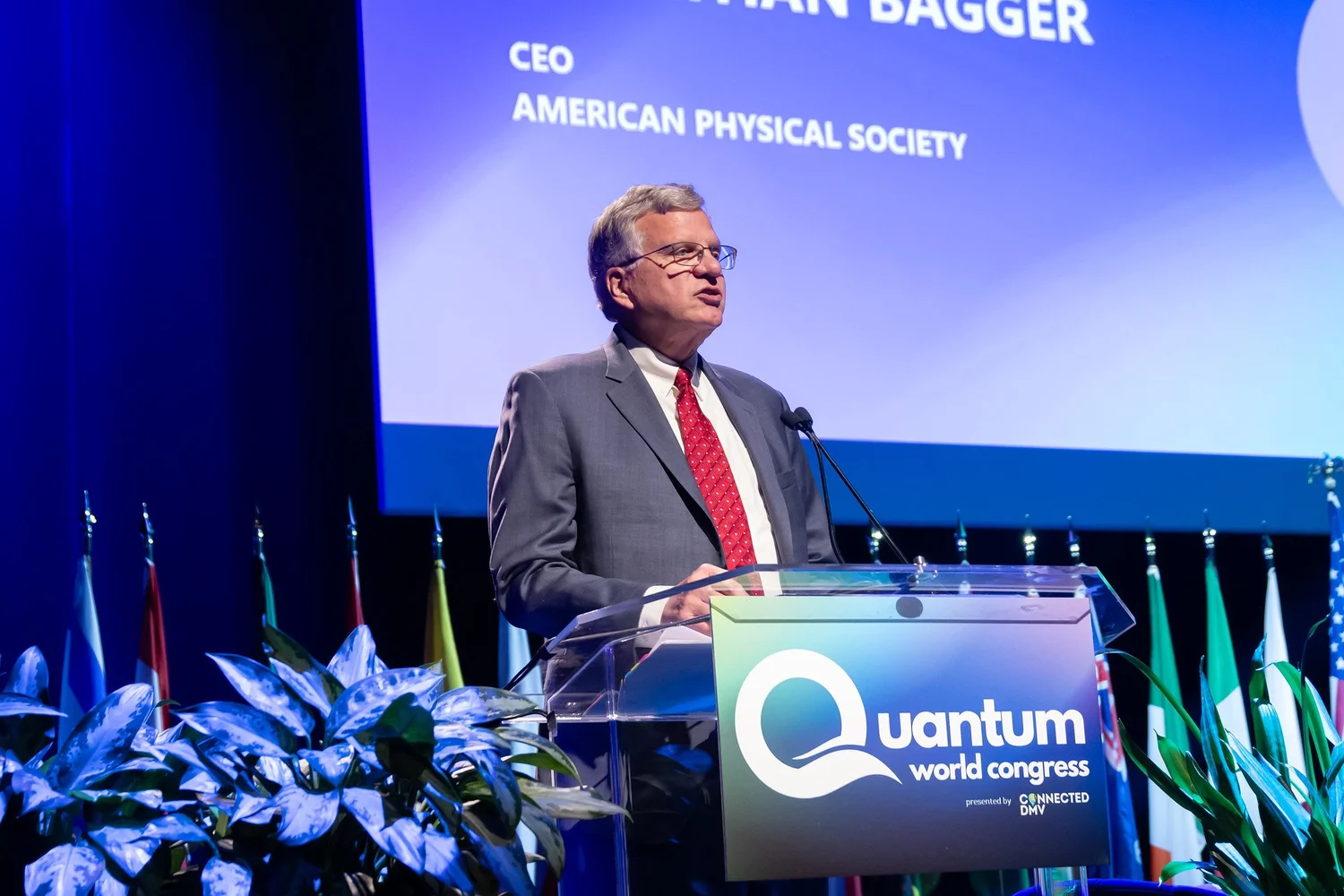
Through Connected DMV’s Global Industry Challenge, with winners announced at Quantum World Congress, more than 600 innovators from over 60 countries came together to apply quantum computing to real-world use cases.
They did so in collaboration with global industry and research partners—including MITRE, JPMorgan Chase, Wells Fargo, and the World Bank Group—working across finance, infrastructure, energy, and life sciences.
This wasn’t theoretical exploration.
It was applied experimentation—teams working across disciplines, across geographies, and across varying levels of quantum maturity to engage with problems that don’t wait for perfect systems.
What emerged wasn’t perfection.
It was something more important: evidence that the field can engage with reality.
A Higher Bar for the Field
The quantum industry is not starting from zero.
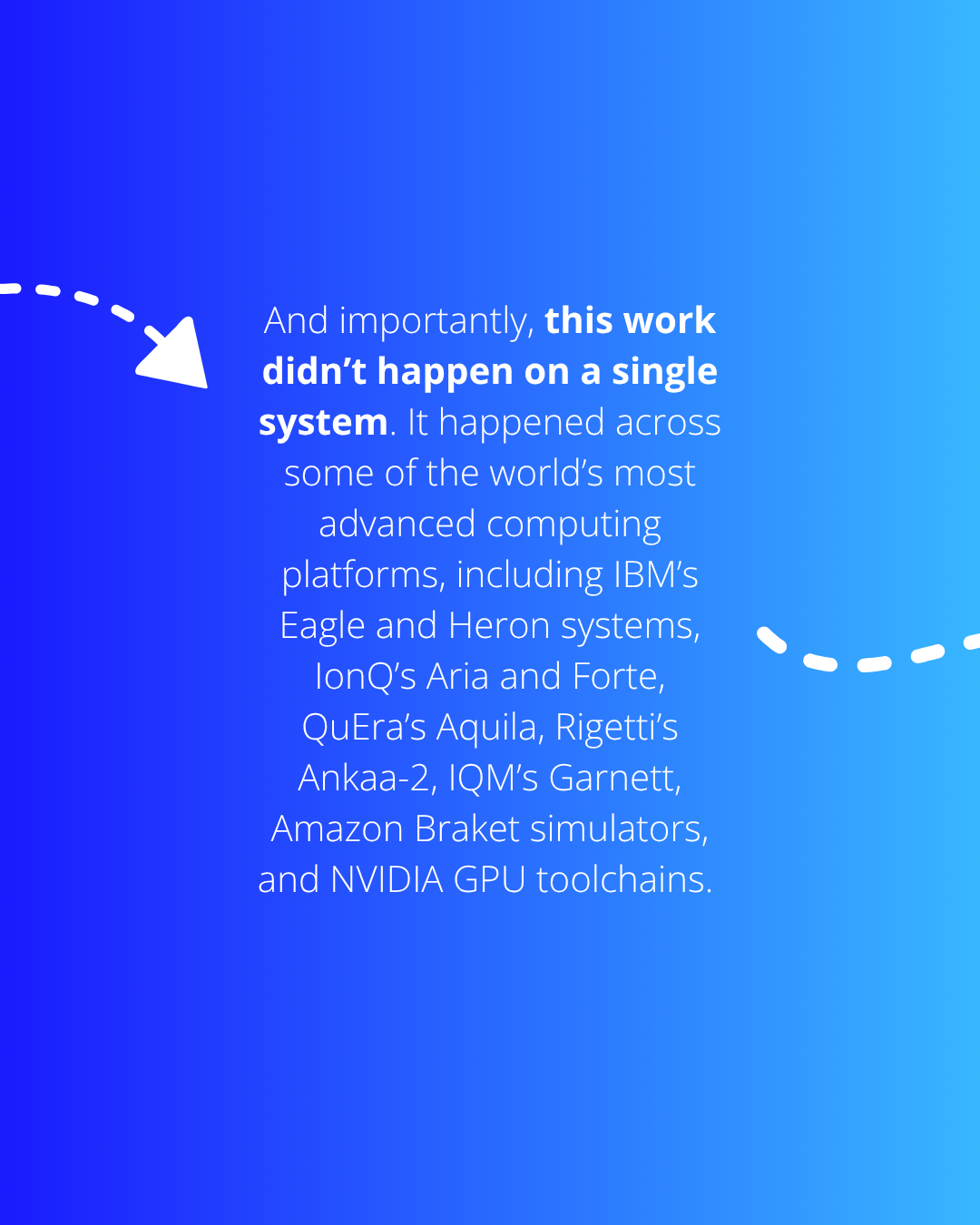
Companies are already building systems, running pilots, and delivering early applications. Platform providers like IBM, D-Wave, IonQ, Rigetti, IQM, QuEra, and Quantum Computing Inc. are enabling real experimentation across multiple architectures.
At the same time, platforms like qBraid and Aqora are lowering the barriers to entry—allowing global teams to access, test, and benchmark solutions across systems that would otherwise be fragmented or inaccessible.
That progress is real.
But the bar is rising.
The question is no longer whether quantum can do something interesting. Increasingly, it is whether it can do something useful—and how that usefulness is demonstrated in real-world environments.
From Exploration to Accountability
The world’s hardest problems are not getting simpler.
Energy systems are becoming more distributed and complex. Financial systems are increasingly nonlinear and volatile. Climate systems are more chaotic and harder to predict. Materials discovery remains constrained by computational limits.
These are environments where classical tools are stretched—and where hybrid approaches, combining quantum, AI, and classical computing, are being tested in earnest.
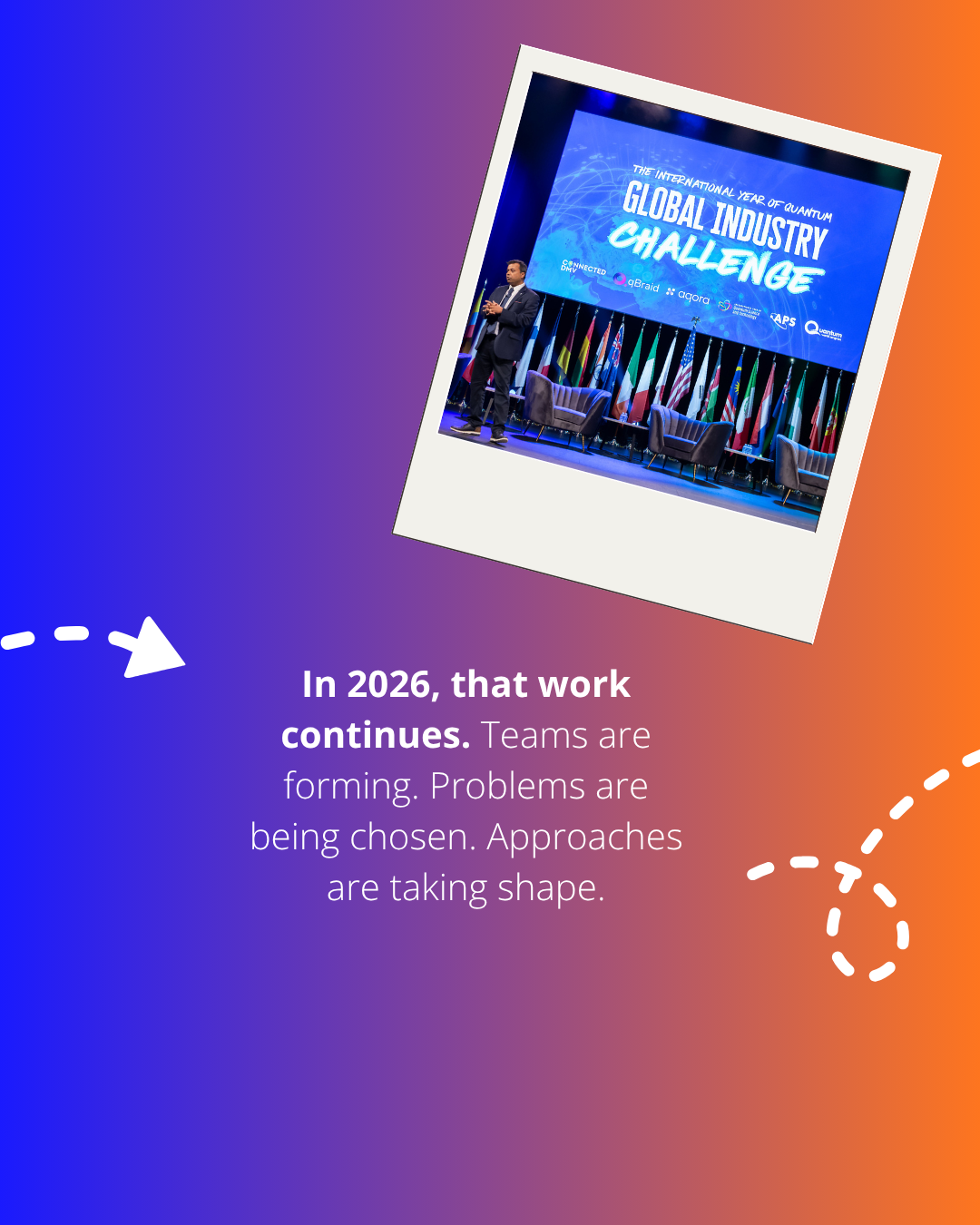
In 2026, the Global Industry Challenge reflects that shift through its partners and use cases.
Organizations like the U.S. Department of Energy Office of Technology Commercialization and Quantum Computing Inc. are driving energy infrastructure challenges focused on microgrid optimization and long-term planning.
Mitsubishi Chemical Group and AIST are advancing materials discovery through hybrid quantum-AI approaches.
And partners including qBraid, MITRE, and JonesTrading are exploring quantum reservoir computing for complex time-series forecasting.
These are not hypothetical exercises.
They are structured opportunities to test where quantum contributes—and how.
Why Real-World Testing Matters
This is what accountability looks like in practice.
Quantum is being asked to show where it works, how it integrates, and what it enables.
Not in controlled environments, but in systems where success is measured by outcomes.
Programs like the Global Industry Challenge create a shared proving ground—where approaches can be tested across architectures, compared against classical baselines, and refined through iteration.
That is how technologies move from promise to practice.
What “Global” Now Means
World Quantum Day has always emphasized the global nature of the field.
But “global” now means something more concrete.
It means execution across borders.
Teams forming across continents. Researchers working across multiple hardware platforms. Solutions being benchmarked in shared frameworks and evaluated against real-world constraints.
The 2026 Challenge builds on that model—bringing together innovators, industry partners, and quantum ecosystems across regions, including networks connected through the American Physical Society and global quantum hubs.
The future of quantum will not be built in isolation.
It will be built through collaboration at scale.
The Moment We’re In
Right now, that process is underway again.
Teams are forming for the 2026 Global Industry Challenge. They are selecting use cases, building collaborations, and developing approaches that will be tested in the months ahead.
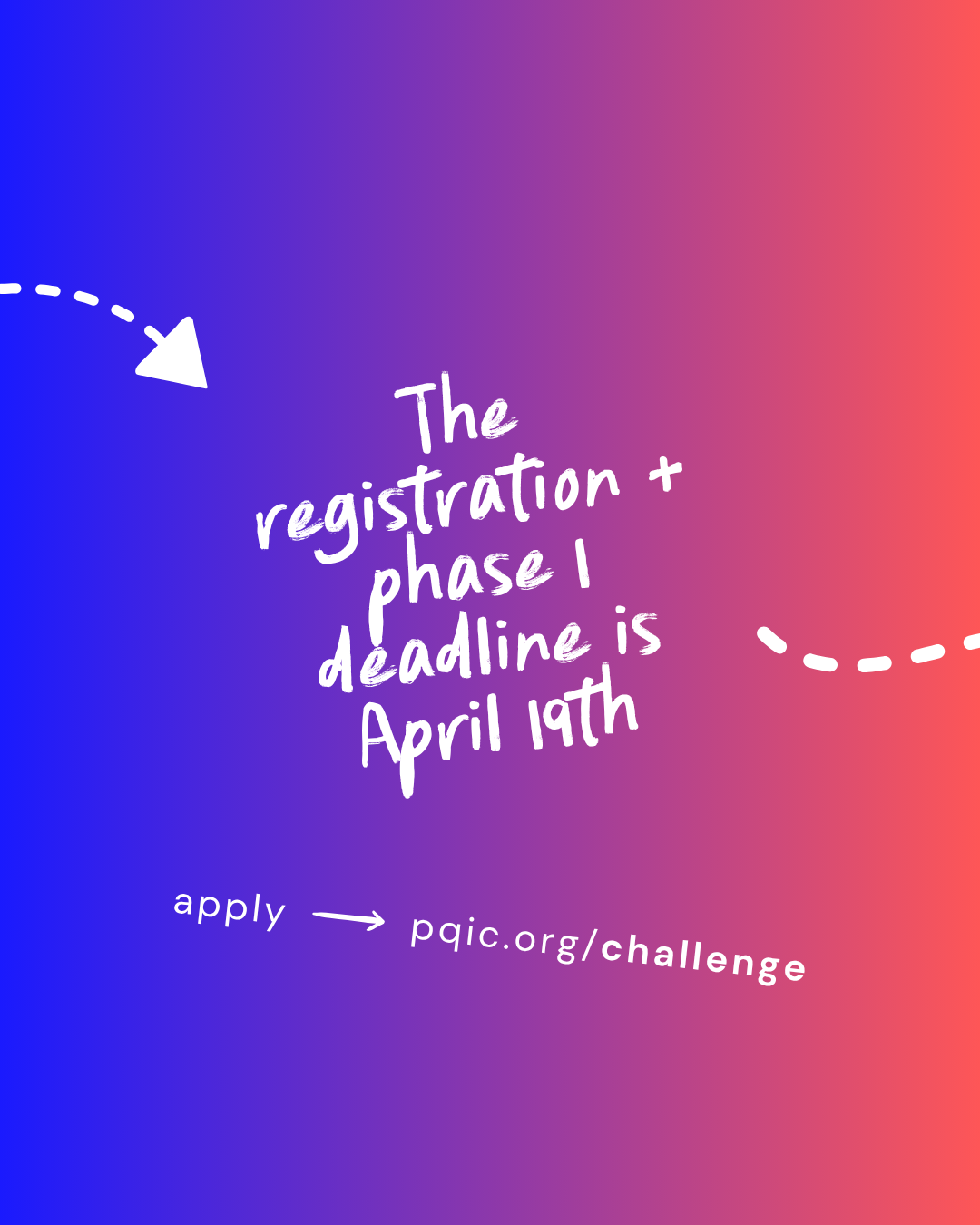
Registration and Phase I submissions close on April 19.
Moments like this rarely feel dramatic. But they are where the direction of a field is shaped—through decisions about what to build, who to work with, and how to engage with the problems that matter.
What Comes Next
If quantum is going to matter—and there is every reason to believe it will—it will be because of sustained effort to move from possibility to proof, and from experimentation to impact.
The future of quantum will not be defined only by breakthroughs.
It will be defined by what we build with them.
Join the Next Phase
The next phase of quantum is already underway.
👉 Learn more: https://www.pqic.org/challenge
👉 Register: https://form.typeform.com/to/Y8JhXCvs?typeform-source=www.pqic.org
Registration and Phase I submissions close April 19.
Be part of the teams shaping where—and how—quantum delivers real-world value.